
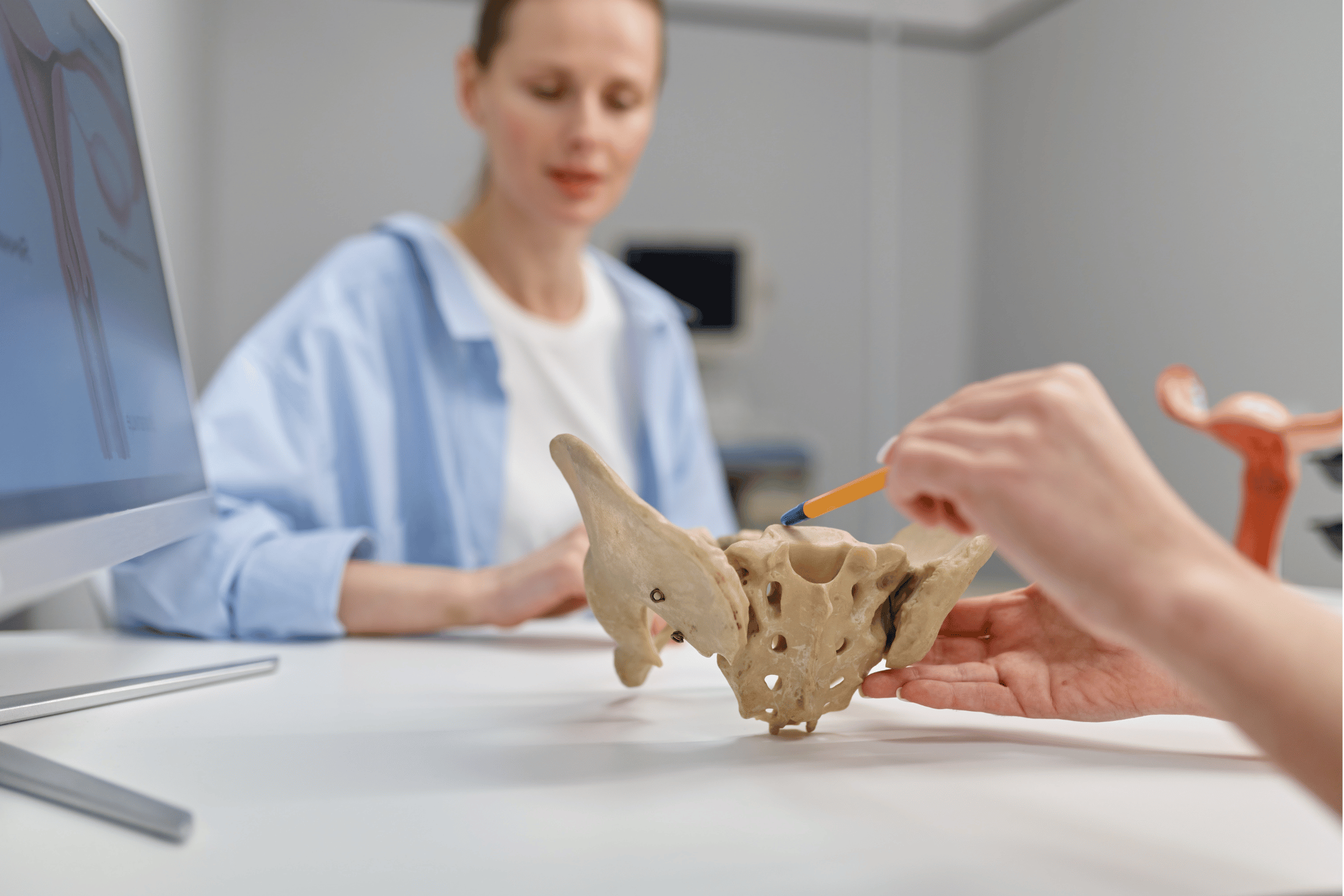
Access to Pelvic Health Treatment
Why We Started the Pay-What-You-Can Fund and Why It Led to the Care Compass Project
Mission Statement
"To advance health equity and improve safety in healthcare by expanding access to trauma-informed pelvic healthcare through financial assistance and supporting research."
How the Care Compass Project Began
In 2023, I sat in my office at Inclusive Care and realized something I think I had known for years but had never fully named:
I was holding together a system that was never designed to care for the people I work with.
Not the folks with pelvic pain who’d been dismissed for decades.
Not the trans and non-binary people who faced hostility or ignorance at every medical doorway.
Not the postpartum moms who felt broken and terrified because no one ever told them their symptoms were treatable.
Not the survivors navigating care inside a system that retraumatized them more often than it healed them.
Every day, I saw people trying to access trauma-informed pelvic floor care because it was their last option—the only thing that had ever actually helped. And I watched too many of them grit their teeth through finances that made “getting better” feel like a luxury.
–Krystyna, Founder
So in 2023, we started the Pay-What-You-Can Fund at Inclusive Care.
It was simple in design and radical in practice: our community pooling resources so no one would be turned away from care that could meaningfully change their life.
And it worked. Beautifully.
But it also made something painfully clear: the need was bigger than any one practice—and bigger than any private practitioner could sustainably absorb without burning out or quietly subsidizing the healthcare system’s failures out of their own bank account.
Which, if we’re being honest, is exactly what so many of us end up doing.

Why We Created the Care Compass Project
By 2025, it was obvious we needed a larger, more durable structure—a way to support patient care, protect trauma-informed research, and build systems that outlasted me, outlasted any political moment, and outlasted the whims of an insurance industry that has never valued this work.
So we founded Care Compass Project, our 501(c)(3) nonprofit.
We built it because the people we serve—trans and non-binary people, women, queer folks, survivors, anyone who has been historically ignored or harmed by medicine—are living in a political climate that has never been more openly hostile to their health, their autonomy, and in many cases, their existence.
Government funding for the kind of work we do—trauma-informed care, pelvic health research, gender-affirming care—has been slashed, censored, or made inaccessible by policy choices that seem designed to make people give up.
But we’re not giving up.
If anything, this moment sharpened our mission.
With fewer government options than ever, private fundraising has become one of the last reliable avenues to get people the care they need.
And just as importantly, the Care Compass Project allows us to continue what has become one of the most urgent parts of our work:

Protecting and Advancing Trauma-Informed Research
Trauma-informed pelvic health care exists today because of decades of research—research that is now disappearing, being censored, or being quietly defunded.
We cannot allow that knowledge to be lost.
We cannot return to a medical landscape where people are in pain and no one can explain why.
We cannot go back to pretending pelvic pain is a moral failing, a psychological weakness, or “just part of being a woman.”
So the Care Compass Project invests directly in research that centers safety, dignity, and the lived experiences of historically neglected communities.
Not in spite of the political climate.
Because of it.
This is how we resist:
We tell the truth.
We take care of each other.
We build structures that can’t be legislated away.


Where We’re Headed
The Pay-What-You-Can Fund was the first step.
The Care Compass Project is the next.
And together, they form a roadmap toward sustainable, community-supported, trauma-informed pelvic health care.
The kind of care people deserve.
The kind of care we are committed to protecting—especially now, especially here, especially for the communities who have been told, again and again, that their pain doesn’t matter.
It does.
They do.
And we’re building systems that finally reflect that.